

Global mobility rarely unfolds in calm conditions. Moves progress amid changing regulations, shifting timelines, competing priorities, and human expectations. At the centre of all this sits communication. When pressure is low, communication tends to feel straightforward. When pressure increases, how information is shared, timed, and prioritised can make a meaningful difference to outcomes.
This article explores how communication functions when it really matters, and how mobility teams can think more deliberately about what adds value in moments that count.

Communication is not neutral in high-pressure environments
In global mobility, communication is often treated as a response to activity. Updates are shared as things change. Questions are answered as they arise. Information moves quickly between multiple parties.
In practice, communication shapes behaviour. It influences confidence, decision-making, and momentum. The same information shared at different moments, or with different levels of context, can lead to very different outcomes.
This challenge is not unique to mobility.
How other environments think about communication under pressure
In emergency response settings, communication is carefully prioritised. Information is shared based on who needs to act and what decisions need to be made. Updates are purposeful rather than constant.
In live news environments, editors decide not only what to communicate but also when. Information is sequenced to maintain clarity as situations evolve. In large-scale programmes, communication often follows defined moments. Stakeholders are aligned at key stages rather than continuously updated, helping maintain focus and accountability. Across these environments, the same principle applies. Communication is designed to support action, not simply to keep everyone informed.
The mobility communication challenge
Global mobility sits at the intersection of many stakeholders. Clients, internal teams, partners, and global talent all require information, but not always at the same time or in the same form. Under pressure, communication can multiply. Messages overlap. Updates are repeated through different channels. Stakeholders receive information that may not yet be relevant to them, or that arrives after decisions have already been made.
The challenge is rarely a lack of effort. It is deciding what genuinely adds value in the moment.
Choosing the right communication method, and the right moment
How a message is delivered can be just as important as what is said. In mobility, different communication methods serve different purposes. A detailed email may support planning and record-keeping, but it may not land well when a decision is urgent. A short call can provide reassurance, but it may lack the clarity needed for next steps. A written update shared too early can create distraction rather than alignment. Timing also plays a critical role. Information shared before it is actionable can increase uncertainty. Information shared too late can limit options.
Mobility teams often add the most value when they pause to consider:
- What is the purpose of this communication?
- Who needs to receive it, and who does not?
- Which channel supports clarity rather than noise?
- Will this message help someone act, or simply react?
When communication is matched to both purpose and moment, it is more likely to land, resonate, and support progress.
Timing and clarity support confidence
For global talent, communication often defines the relocation experience. Clear expectations, well timed updates, and consistent messaging help build trust, even when circumstances change.
For internal stakeholders, communication signals control. When information is shared calmly and deliberately, it reduces escalation and reactive decision making.
In many cases, saying less, at the right time, is more effective than saying more, too early.
Treating communication as a decision
One useful shift for mobility teams is to view communication as a deliberate decision rather than an automatic response.
Questions worth considering include:
- Who needs this information now?
- What action does this enable?
- Does this message reduce uncertainty or add to it?
- Is this the right moment to communicate, or should it wait?
These questions do not require a new framework. They require intention.

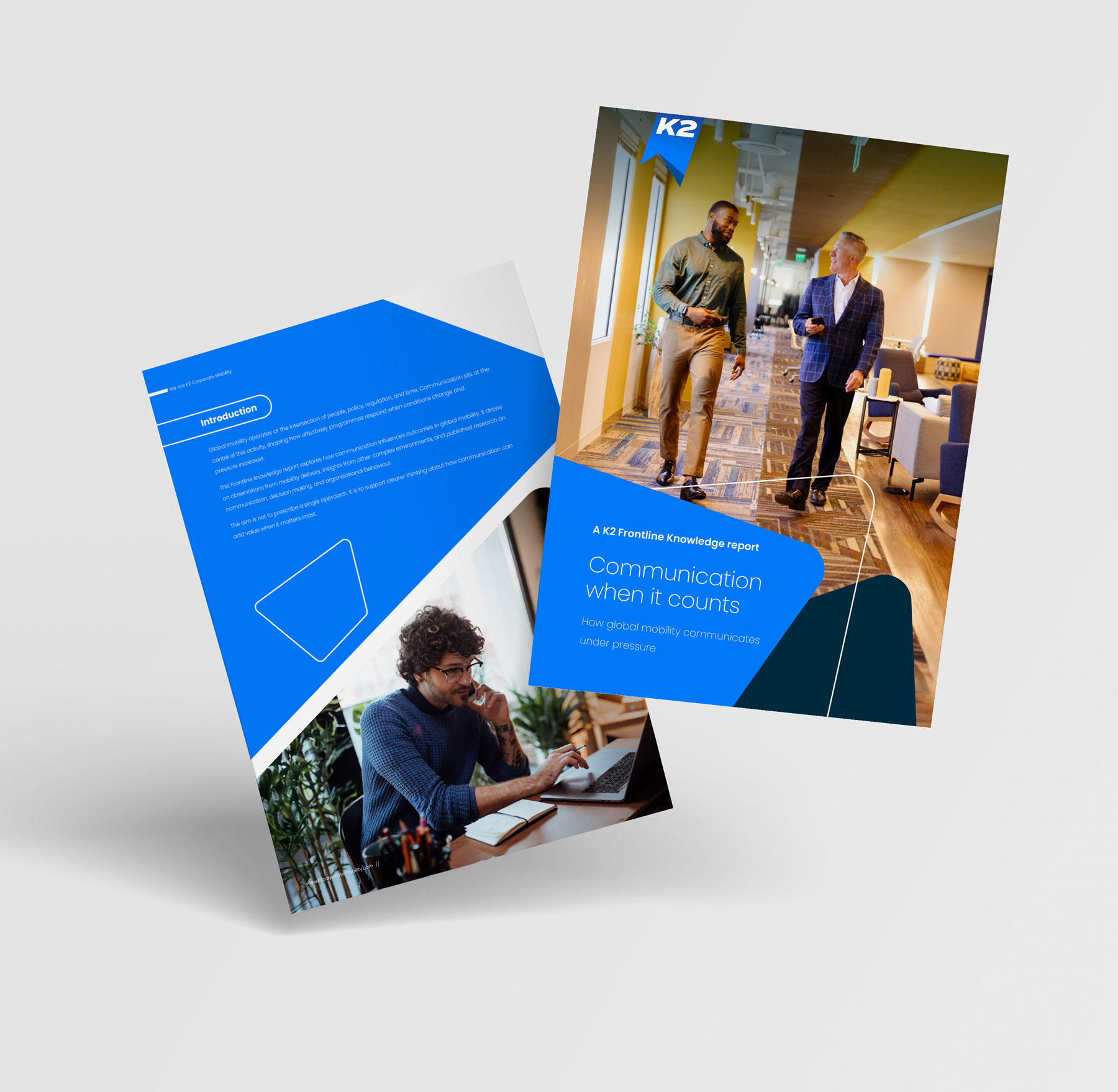
Communication when it counts
There is no single model for communicating under pressure in global mobility. Every organisation, programme, and move is different. However, communication remains one of the most influential elements teams can shape. When approached with intention, communication supports alignment, confidence, and delivery. When left unchecked, it can create noise at the moments when clarity matters most. This Frontline perspective is designed to encourage reflection and discussion across the mobility community, helping teams think more deliberately about communication when it counts.
Continue the conversation
If this article has prompted reflection on how communication works within your mobility programme, we invite you to continue the conversation.
Share the article internally, discuss it with colleagues, or get in touch to explore how communication shows up in your current activity.